
Damon Krukowski
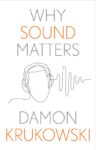
Why Sound Matters
(Yale University Press, October 2025)
Read a review in the Los Angeles Book Review
Listen to Damon Krukowski on Critical Listening podcast
A poignant consideration of the material aspect of sound and how it fundamentally shapes our experience of the world, both in its presence and absence
From the joyous communal connections fostered through shared auditory experience to the devastating impact of noise pollution in the deep sea, musician and author Damon Krukowski urges readers to reconsider the significance of sound and its role in both our personal and collective well-being. He looks despairingly at how the multipronged efforts of urban dwellers to mitigate city noise have led to increased isolation, loss of community, and a sense of physical detachment from one’s surroundings. He considers the consequences of the commodification of sound in the digital era. And he looks at what’s at stake in trying to preserve the world’s dwindling quiet places.
Interspersed with personal reflections from years of working in the music business, this book investigates sound’s role in the environment, its value as a material, its relationship to labor, and how it affects our interactions with one another. Krukowski invites you to hear the world anew and renew your relationship with one of our most precious natural resources. So listen up!
Praise for Why Sound Matters
“This book is something different, offering a viewpoint not merely novel but downright revealing.” – Los Angeles Review of Books
“To understand why music matters, we have to also understand why sound matters. Damon Krukowski has a singular skill for connecting dots—between tour stories and deep research, musicians voices and cultural context—and here, his braided narratives on sound as material culture, environmental concern, and art form raise big ideas and urgent questions on the current sonic situation. Why Sound Matters convincingly argues that issues of music and creative labor today are rooted in a general misunderstanding of the value of sound—a vital contribution to the conversation on where music and audio culture goes from here.” – Liz Pelly, author of Mood Machine: The Rise of Spotify and the Costs of the Perfect Playlist
“Why does sound matter? This book will tell you. Things you will learn: The community theory of value; Herbie Hancock has a good memory; the audience completes the work; how & why modern corporations are making life worse. Damon Krukowski explains how the music business became the first casualty of the connected world – but is now the first business to find a possible way out of this modern mess. Does that interest you? It should. There’s always more to life than meets the eye – and there’s certainly more to life than meets the ear. Read this book to find out exactly how much more. It’s a modern masterpiece.” – Jarvis Cocker, Pulp
“In Why Sound Matters, Damon Krukowski brilliantly ties together many things that I haven’t yet seen put into words, centered around the acknowledgment of sound as a material that has value. It’s an inspiring guide for how to envision change in a world of noise pollution and music devalued by the corporate algorithm. This is a crucial read for every musician today and for anyone who cares about music.”
– Julia Holter, singer-songwriter
“In his work as a musician, activist, publisher, and writer, Damon Krukowski has always been an inspiration. This book is no exception.”
– Jeff Mangum, Neutral Milk Hotel
“Clear thinking on a cloudy subject, Why Sound Matters chases sound’s elusive and immeasurable value through the studio process, live performance, the economics of streaming, field recording, the precariousness of being a working musician, and a dozen other areas. At a time when music teeters somewhere between a gift beyond price and literally worthless, Damon Krukowski insists on sound as a material force in the world – something that can harm and heal, a resource that’s exploited but that could be liberated. The questions raised and answers offered will reverberate through your mind long after you close the book.” – Simon Reynolds, author of Futuromania: Electronic Dreams, Desiring Machines and Tomorrow’s Music Today
“Why Sound Matters explores the state of the music economy today—dystopian—with suggestions for possible improvements. The vocation of music is the original gig economy, in many ways forecasting the future of the wider world. The internet imperils copyright and every occupation downstream of it. Streaming services are every songwriter’s nightmare. The pandemic made live concerts impossible for a few years. And yet people still want to make music! What is to be done? Well, organization and solidarity, it turns out, as Krukowski proposes in his hopeful and upbeat final chapter. Musicians tend to be pretty good at forming groups (such as bands, orchestras, and scenes), so maybe the outlook is not as bleak as we thought. – Stephin Merritt, The Magnetic Fields
“An urgent dive into the tangibility of sound and community. As a mastering engineer, I hear, feel and see sound daily on various oscilloscopes and meters but it remains an almost impossible task to explain why something you can’t physically touch or see offers so much immeasurable wealth to our lives. Damon captures that brilliantly and connects the dots between sound, the natural world and the systems that exploit both. Today, music is at its most accessible in the form of playlists that cater to every mood known to man. Musicians and their labor, so often dismissed, are the last to be compensated in a multibillion-dollar industry that profits and exploits their work while streaming corporations continue to erode the value of recorded sound. As the natural world faces a sixth extinction, Damon reminds us of the important role of preservation and the labor behind it. Writer and archivist Paul Bowles once said, ‘Unlike the other arts, music, once it is gone, is gone forever.’” – Heba Kadry, Mastering Engineer
Damon Krukowski is a writer, publisher, and musician, and is the author of The New Analog and Ways of Hearing. He was in the indie rock band Galaxie 500 and is currently one-half of the folk-rock duo Damon & Naomi, and he has taught writing and sound (and writing about sound) at Harvard University. He lives in Cambridge, MA.